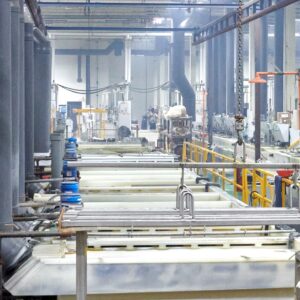
Benefits of the Tin Electroplating Process
What is Tin Electroplating?
Tin electroplating is the process of using an electrical current to create a chemical reaction to produce a layer of tin plating onto a ferrous or nonferrous substrate. The electrical current travels through an aqueous solution of tin chemistry and a positively charged tin anode, causing the tin in the solution to attract onto the metal parts attached to a negatively charged cathode. The result is a soft, silver-white deposit of tin on the desired substrate.
What Are the Different Tin Plating Processes?
The type of method used for tin plating relies heavily on the configuration of the part and on customer requirements. No plating method is inherently better than another, but one will be more appropriate over another based on the limitations of a part.
- Barrel Plating – Barrel plating is typically reserved for small parts that can withstand being slowly tumbled in a rotating barrel that is dipped into the plating solution. Due to the nature of how the parts make electrical contact with the cathode, this method can take longer to achieve uniform coverage. Parts that are very thin or made of a soft substrate should not be barrel plated.
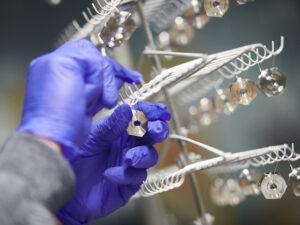
- Rack Plating – Rack plating is ideal for larger parts or parts that are thin and flat that would otherwise be damaged in the barrel method. Rack plating mitigates the chance of damage, shadowing or adhesion issues that can otherwise occur from thin and flat parts sticking to one another. Metal wire is either wrapped around the part or threaded through a hole or slot of the part then hung from special racks that allow the negative charge to pass through and make electrical contact with the part to plate.
- Vibratory Barrel – A vibratory barrel is a specially designed basket with a vertical shaft in the center. A generator emits a pulse through the shaft causing the parts to gently vibrate around the axis. While gently vibrating around the axis, the parts maintain electrical contact with the cathodes at the bottom of the basket creating a uniform deposit. This method is usually reserved for thin, fragile parts with fine points or contact pins.
Types of Tin Electroplating
 Matte Tin Plating – Matte tin has a dull surface appearance because it does not contain any brightening additives. The lack of brighteners allows matte tin to maintain excellent solderability and ductility.
Bright Tin Plating – Bright tin contains additives that tighten the grain structure of the deposited metal, creating a shinier, more cosmetic appearance. Due to the tightened grain structure, bright tin is also more resistant to discoloration over matte tin. However, there is a risk of the bright tin burning when soldered due to the addition of the brighteners.
Tin Lead Plating – Lead alloy is added to pure tin to combat the phenomenon of “whiskers” occurring in the pure tin. The common co-deposit of these two alloys are 60/40 tin lead and 90/10 tin lead. The added lead alloy lowers the tin’s melting point from 450ºF to 361ºF. This lowered melting point makes tin lead an optimal choice in electrical applications for its superior solderability.
Bismuth Tin Plating – Bismuth tin is an increasingly common RoHS-compliant alternative to tin lead with a co-deposit of tin and bismuth. Bismuth tin is capable of withstanding long-term cold exposure, combating the condition known as tin pest. The added bismuth deposit also makes the tin whisker resistant.
The Benefits of Tin Electroplating
- Excellent Solderability – Compared to other heavy metals, tin has a very low melting point of 232ºC/450ºF and even lower melting point of 182ºC/361ºF when co-deposited with lead. This makes tin an ideal candidate for soldering applications and increasing the overall solderability of the substrate.
- Ductile – Tin is a soft metal that is very flexible. Manufacturing companies can easily form, stretch, and mold the plated substrate into different shapes without cracking or harming the adhesion of the plating.
- Cost-Effective – Tin electroplating is cost-effective and easy to obtain compared to other electroplated metals like silver with similar soldering properties and can be plated onto almost any metal.
- Corrosion Resistant – Tin has good corrosion resistance in protecting the substrate.
- Non-Toxic – Tin is widely considered non-toxic and often used in the form of tin cans covered in lacquer. The ductility of the tin allows the tin to be formed, stamped, and shaped without damaging the tin adhesion.
Tin Electroplating Considerations
 Whiskers – Whiskering is a phenomenon that causes metal filaments to occur on the surface of pure tin plating. Whiskers can appear soon after plating or take years to appear. These crystalline structures can be .0001 inch in diameter and can stretch 3/8 inch or longer, with the capacity to carry current. In the majority of applications, the growth of whiskers is not an issue. However, pure tin is not recommended for applications with low-voltage electrical equipment where items are closely spaced. As the whiskers can cause electrical shorts or current arcs and critical disruptions in the electronics. Underplates like nickel can help reduce the risk of whiskers or co-depositing the tin with a minimum of 2% lead or bismuth.
Low Melting Point – While the low melting point of tin is ideal for soldering applications, the limited temperature window of tin restricts the number of appropriate applications outside of soldering. Tin on steel faces difficulty due to the high temperature typically needed to relieve the steel of the embrittlement.
Tin Pest – Also known as tin disease. Occurs when the structure of the pure tin molecules expands and moves away from its cubic structure. The molecular change becomes greatly unstable in the presence of low temperatures. Due to the unstable nature of the structure, the tin can lose adhesion to the substrate and loses conductivity. Ultimately, the tin becomes incredibly brittle and disintegrates at an increasing pace. Tin pest is at great risk of forming in temperatures in -22ºF to -40ºF, but still poses a risk at prolonged temperatures of 56ºF and cooler. Tins co-deposited with lead or bismuth do not experience the same risks.
Tin Oxide – Care should be taken while handling  and storing tin-plated items. Tin oxide naturally occurs in a clean, dry atmosphere with continuous airflow, but the oxidation rate is very slow. If the tin is stored in a warm, humid environment with little airflow, the oxidation occurs at a much more rapid rate. A thick dull gray oxidation layer will form requiring the oxide to be broken through before successful soldering can occur. Using a resistance paper during packing or storage of a tin-plated part will help slow down the oxidation and mitigate tarnishing.
Staining – The structure of the tin makes it susceptible to staining and discoloration as it absorbs moisture and oils verify easily and is not easily cleaned without burnishing the finish. Gloves are recommended in handling tin-plated parts to avoid staining or discoloration.
Fretting – When used as a contact, micro-motions and repeated mating and disconnecting of the contacts can cause fretting corrosion and wear away the tin coating. The amount of fretting can depend on the thickness of the tin deposit on the contact and can be countered with lubrication. Note: gold and tin should never be mated as a connection.
TIN ELECTROPLATING PROCESSES FOR AEROSPACE AND DEFENSE
 Multiple industries utilize tin electroplating for its desirable properties — like low cost, high ductility, and high solderability. INCERTEC specializes in tin electroplating complex parts for the aerospace and defense industries and testing them in accordance with strict NADCAP requirements.
Most of the parts tin lead and bismuth tin plated at INCERTEC are electrical components, standoffs, and electrical housing. These electrical components are later assembled into circuit boards with standoffs and housing that allow for the continued air circulation.
INCERTEC PLATING LINE SERVICES
Tin electroplating is only one of the plating services offered at INCERTEC. The goal at INCERTEC is to always have the space and capacity open to partner with customers to scale production through dedicated plating lines.
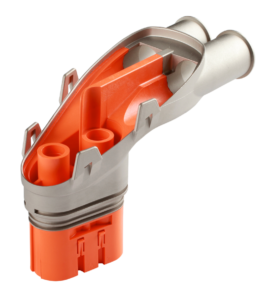
 SELECTIVE PLATING
 A PROCESS PROVEN